

Local MSK ultrasound for Brisbane’s western suburbs
Sore shoulder that won’t settle? Achilles tendon flaring up after a weekend game? Knee giving you trouble on the stairs? Musculoskeletal (MSK) ultrasound is often the first imaging step your GP or physio will recommend, and we now offer it at our new Jindalee clinic.
MSK ultrasound uses high frequency sound waves to produce real time images of muscles, tendons, ligaments, nerves, bursae and the surfaces of bones. Because it’s real time, our sonographers can ask you to move the affected joint while we scan, which often gives a clearer picture of what’s actually happening when you experience pain.
What MSK ultrasound can help assess
Our sonographers regularly perform MSK ultrasound for a wide range of clinical questions, including:
Shoulder pain and suspected rotator cuff tears
Tennis elbow, golfer’s elbow and other tendon injuries
Wrist and hand conditions, including ganglion cysts and carpal tunnel assessment
Hip pain, including bursitis and gluteal tendon pathology
Knee soft tissue injuries, Baker’s cysts and patellar tendon problems
Ankle sprains, Achilles tendon assessment and plantar fasciitis
Soft tissue lumps, lipomas and other superficial masses
Ultrasound can also be a helpful adjunct in trauma cases. It can show cortical disruptions, which are surface level fractures, joint effusions and soft tissue swelling. It’s not a replacement for X-ray or CT in every fracture scenario, but in some clinical situations it can offer useful additional information without further radiation exposure.
Why patients and referrers choose ultrasound
Compared to other imaging methods, MSK ultrasound has a few qualities that make it a popular first choice. There’s no radiation, which matters particularly for children and young patients. The scan is dynamic, so we can watch a tendon glide or a joint move in real time. And availability is generally faster than MRI in most parts of Queensland.
That said, ultrasound isn’t the right test for every musculoskeletal question. Deeper structures, full thickness cartilage assessment and certain bone pathologies are better imaged with MRI or CT. If our sonographer or radiologist feels another modality would give a clearer answer, we’ll mention this in the report so your referrer can plan the next step.
Preparing for an MSK ultrasound
Most MSK ultrasounds need very little preparation. There’s no fasting, no full bladder and no need to stop your usual medications. The main thing is to wear loose, comfortable clothing that allows easy access to the area being scanned. For example, if you’re having a shoulder scan, a singlet or T-shirt is ideal.
If you’ve had previous imaging of the same area such as an X-ray, MRI or earlier ultrasound, please bring the films, USB or report with you. Comparing scans over time often gives our radiologists important context, especially for chronic conditions.
What happens during the scan
When you arrive at our Jindalee clinic, you’ll be shown into a private scan room. Your sonographer will ask a few targeted questions, such as where the pain is, when it started, what makes it worse and what activities you’re trying to get back to. These details guide where we scan and what we’re looking for.
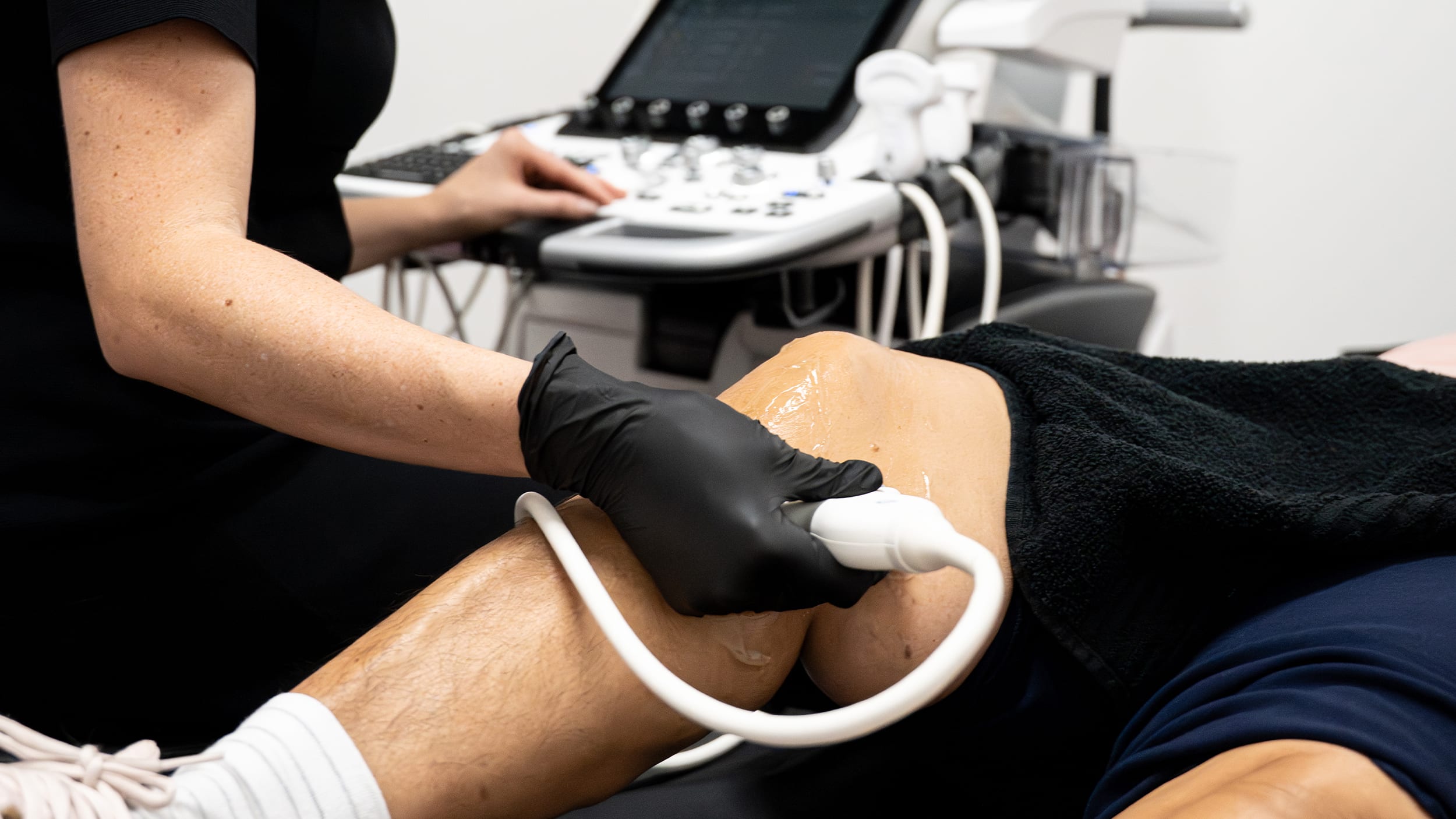
Warm gel is applied to the area, and the transducer is moved over the skin to capture images. You may be asked to move the joint, contract a muscle, or hold a particular position so we can see how structures behave under load. Most MSK scans take 15 to 30 minutes, although more complex assessments can take longer.
Once we’re done, the gel is wiped off and you’re free to leave. There are no restrictions afterwards, and you can drive, exercise and return to work as normal.
Getting answers sooner, closer to home
A big reason we expanded into Jindalee was to make diagnostic imaging more accessible for the western suburbs. Patients shouldn’t have to drive across town or wait weeks for a scan that could be done locally in less than half an hour.
We also work closely with local GPs, sports medicine doctors, physiotherapists and orthopaedic specialists. Our reports are detailed, our images are sent electronically, and we’re always happy to talk through findings with referrers if needed.
Frequently asked questions
Do I need a referral for MSK ultrasound?
Yes, a current referral from a GP, specialist or eligible allied health practitioner is required.
Will my MSK ultrasound be covered by Medicare?
Many MSK ultrasounds attract a Medicare rebate when referred appropriately. Our team will explain the costs and any rebate at the time of booking.
Can ultrasound replace an MRI?
Sometimes, yes, particularly for tendon and superficial soft tissue assessments. Other times, MRI is the better test. The right choice depends on the clinical question, and your doctor will guide this with help from our report.
Is MSK ultrasound safe?
Diagnostic ultrasound is a well-established imaging method that doesn’t use ionising radiation, which is one of its key advantages.
Book your MSK scan in Jindalee
If you have a referral for an MSK ultrasound and you’d like to be seen locally, we’d love to look after you. Call (07) 3170 1352 or book via our website to find a time that suits.